Bradley Ford and Darren George know their business. One is a former city manager. The other is an HR executive. They know their market, the problem they're solving and where their products fit. They can easily tell you about the dinner that led them to work together.
But they were also in the sprint of building a company and preparing to launch City Compensation, the flagship software from Public Sector Talent Analytics. When you're that close to the work, it can be hard to take five steps back and explain why you're doing it.
Their website reflected that. They had a placeholder up. My job was to help them tell the bigger story for the first part of their About page.
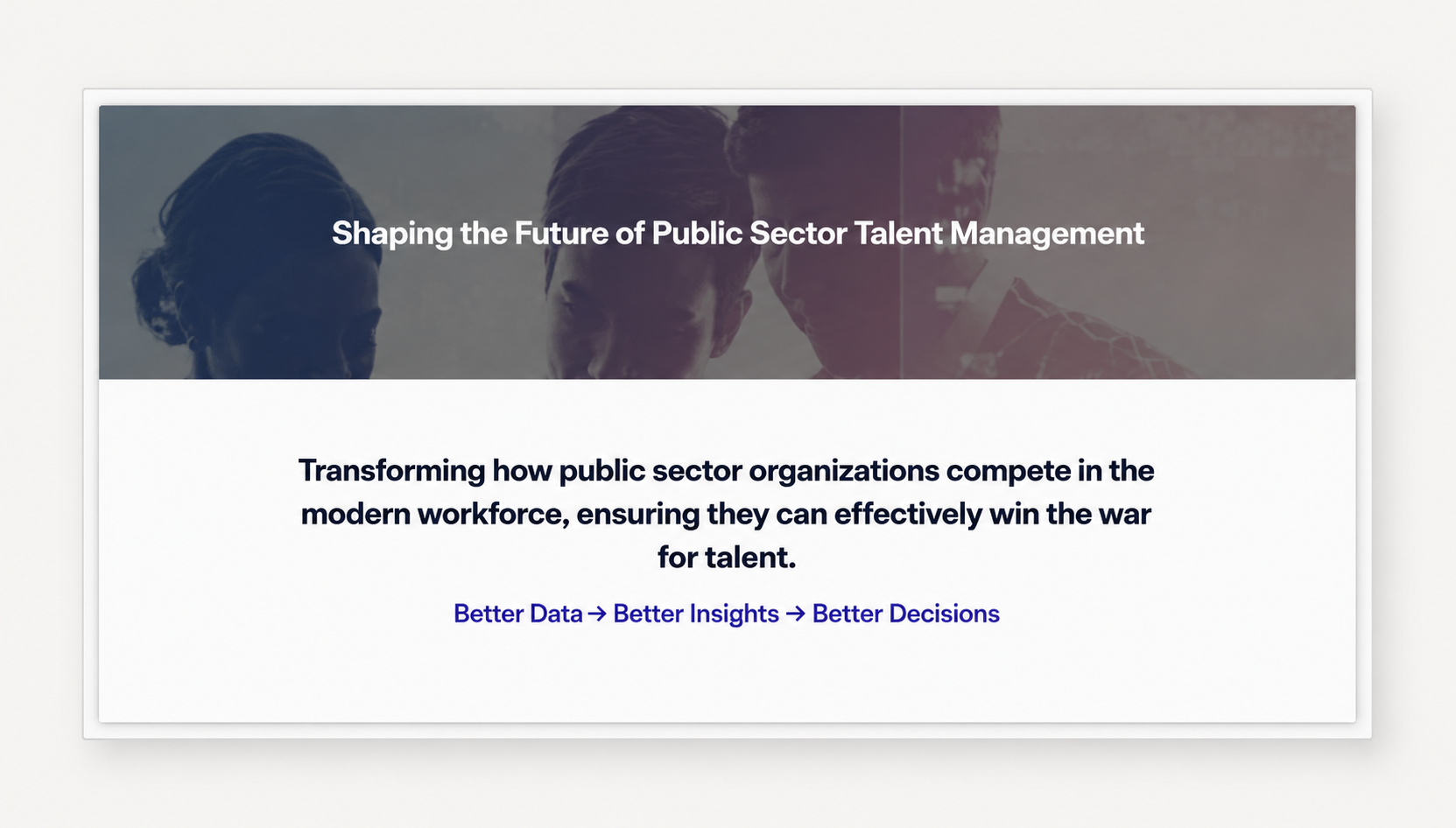
BEFORE
The original About page hero
At first, we talked about the product. I needed the nitty gritty. As an outsider, I had to understand City Compensation well enough to explain it to insiders: city managers, HR leaders and county administrators making high-stakes hiring and compensation decisions. I learned how they traditionally get their data, why compensation studies can take more than a year to complete, and what PSTA was building instead.
Once I understood the core of the business, I could get more conversational.
Bradley had spent more than two decades in city government and started his career as a data analyst. Clearly, this was a guy who had a view on data. So I asked him: What's your philosophy on data?
His answer was simple: Data is better than gut.
Why?
That question got us somewhere more interesting.
Bradley told me how he'd started building his own compensation spreadsheets when the information he needed wasn't available. Eventually, colleagues from other cities began calling him for help because, as he put it, they knew he'd "done the homework."
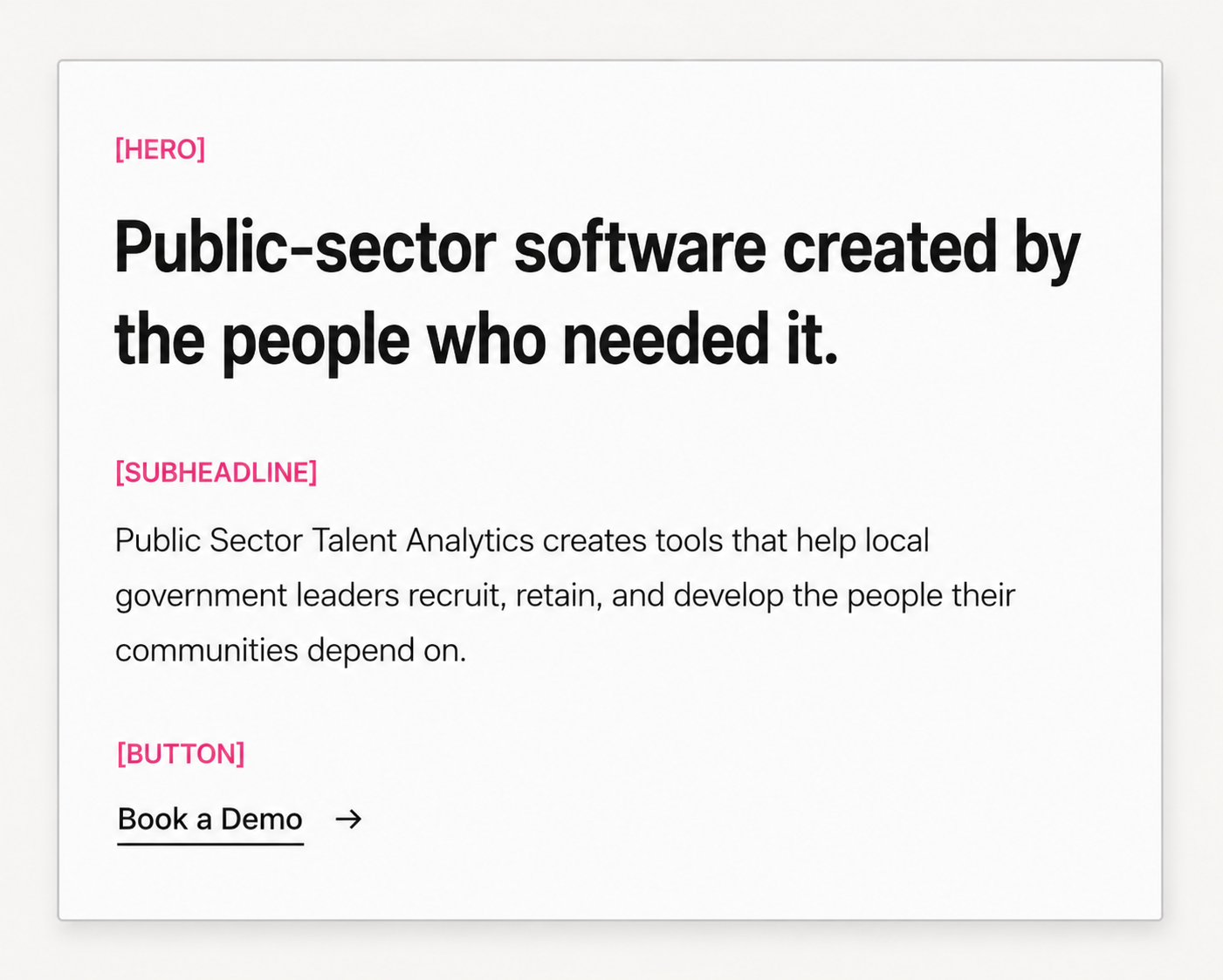
AFTER
The new About page hero
With Darren, I kept pushing on a different question: Why did this matter to him?
Making public-sector hiring faster, easier and less expensive is a strong business proposition. But it wasn't the whole reason Darren cared. Public service has been important throughout his life. What he ultimately wanted was to help local governments attract great people because great people build stronger communities.
Those conversations changed the direction of the copy.
I initially thought City Compensation would be the center of the story. It was the product preparing to launch and had the clearest problem to solve. But PSTA plans to build more than one product. Building the company's story around its first one would make the messaging obsolete as the business grew.
The larger story was already sitting in the interview.
PSTA wasn't simply building better compensation software. Bradley and Darren were bringing together two careers, one rooted in public-sector data and leadership and the other in talent strategy, around a shared belief: local governments need better tools to recruit, retain and develop the people their communities depend on.